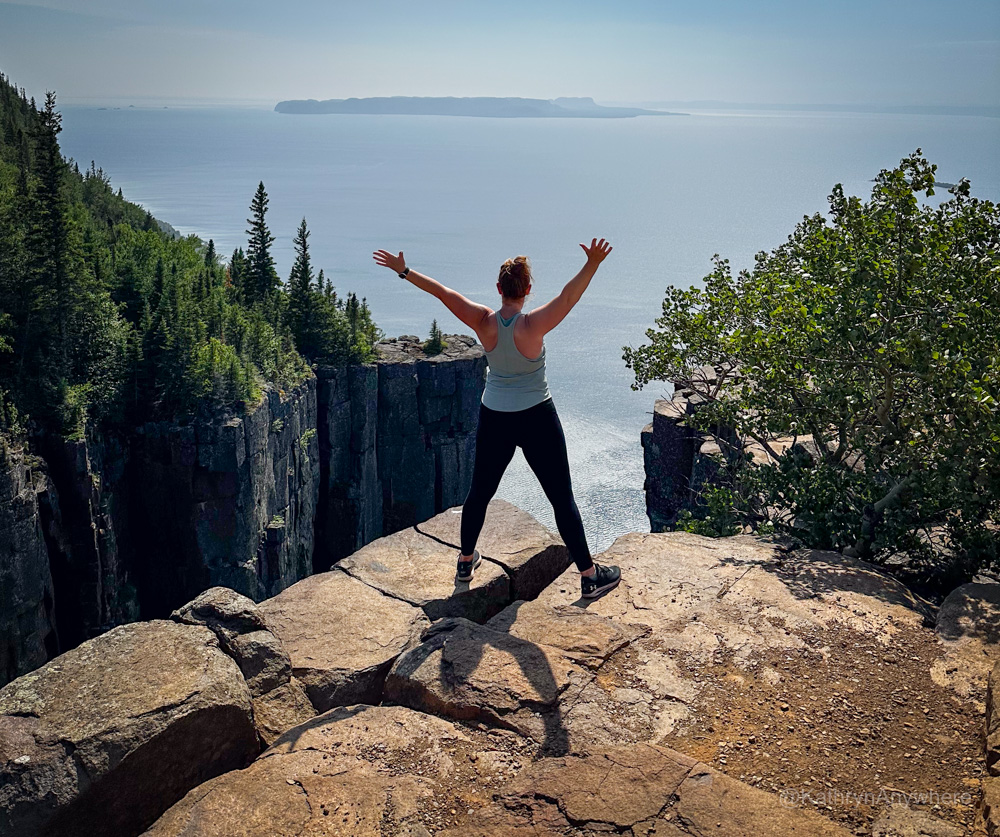

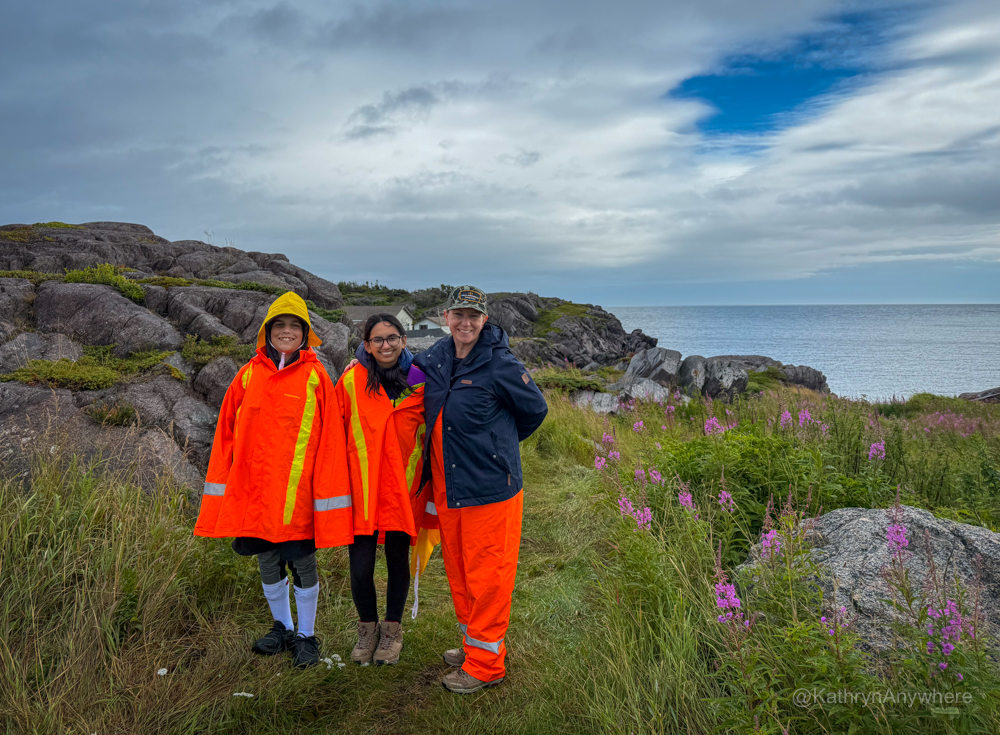
Most people treat Newfoundland like a destination. We treated it like an adventure. From Quebec motels and Nova Scotia ferry crossings to shark tagging, whitewater rafting, cod jigging, and hidden coastal communities in Newfoundland and Labrador, we made this Ontario to Newfoundland road trip itinerary an experience we’ll remember forever.
When my family (two kids, my boyfriend, and our dog, Axel) and I set out from Ontario for St. John’s, we could have raced across the island after stepping off the ferry in Port aux Basques. Instead, we spent days exploring Central Newfoundland, meeting locals, hiking coastal trails, looking for whales, fishing for sharks to tag, rafting the Exploits River, and discovering some of the communities that make this province so unforgettable. And I can guarantee you, we would do it again and take more time to explore, as the central region is that special.
A little background before we get into the weeds! My mother is from the Burin Peninsula in Newfoundland, and the majority of her family lived on “The Rock” while we were growing up. That means we spent many summers driving there for family visits. Many members of my family now live around St. John’s, so I am fortunate enough to have taken this journey through the Maritimes many times.
If you’re planning your own Newfoundland road trip, steal our itinerary! This seven-night itinerary takes you from Ontario to St. John’s, with enough adventure packed into the journey that you’ll stop thinking of the drive as a commute and start treating it as a vacation.
Here’s how we did it (excluding all gas stations and roadside pee stops unless noteworthy).
Adventure Central Newfoundland generously hosted us for Days 4-7 of our trip, letting us stay and play in this amazing part of Newfoundland and Labrador. As always, this post reflects my honest experience and opinions. I would never confess to being seasick if this were simply a fluff piece.
🚗 7-Night Road Trip at a Glance
Distance
3,100+ km
Driving Time
About 36 hours
Ferry Crossing
North Sydney → Port aux Basques
Best For
Adventure-loving families & road trippers
Day 1: Belleville, Ontario to Rivière-du-Loup, Quebec
Drive time: Approximately 7–9 hours, depending on stops.
Overnight Stay: Le Fraser Motel, Rivière-du-Loup, Quebec
We kicked off our Newfoundland road trip in Belleville, Ontario, with a full day of driving ahead of us and a plan to put some serious kilometres behind us. Our first overnight stop? Rivière-du-Loup, Quebec.
Now, I’ve driven through Rivière-du-Loup more times than I can count. It’s always been one of those places along the Trans-Canada Highway that signals we’re making good progress toward the East Coast. Keep driving, keep moving, we’ll stop somewhere else. Except this time, we actually stopped. And wouldn’t you know it? I’ve been driving past one of Quebec’s prettiest little river towns for years without giving it a second thought.
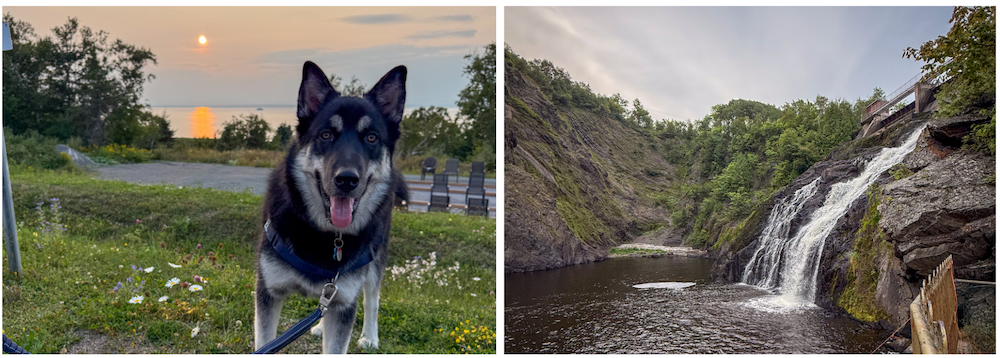
We rolled into Rivière-du-Loup before sunset, checked into our motel and were treated to a beautiful evening along the St. Lawrence River. Not a bad way to end the first day of a cross-country adventure. Rivière-du-Loup deserves more than a quick gas station stop. It has a lovely downtown, beautiful waterfront views, and even waterfalls right in the city.
We didn’t have time to explore much that evening, but the following morning we made a point of checking out Parc des Chutes, where you can stretch your legs on the trails and take in an impressive waterfall before getting back on the highway.
Here’s a hot tip from me to you: If you’re driving through Rivière-du-Loup on your way to Atlantic Canada, plan to arrive before sunset. Walk along the St. Lawrence, grab dinner downtown, and take a little time to enjoy the place instead of treating it like another highway exit.
Where We Stayed: Le Fraser Motel
We spent the night at Le Fraser Motel, which turned out to be a great choice for our road-tripping crew.
Travelling with two kids, a dog and enough luggage to suggest we were relocating permanently meant we weren’t looking for anything fancy. We needed somewhere clean, comfortable, spacious and pet-friendly. Le Fraser Motel delivered.
The rooms gave us plenty of space to spread out, Axel was welcome, and after a long day on the road, having somewhere comfortable to crash was exactly what we needed. There’s no restaurant on-site, but you’ll find dining options nearby.
Would I stay here again on an East Coast road trip? Absolutely. And next time, I might even give Rivière-du-Loup more than one night.
Day 2: Rivière-du-Loup, Quebec to Antigonish, Nova Scotia
Drive time: Approximately 8–10 hours, depending on stops.
Overnight Stay: Homeward Inns of Canada, Antigonish, Nova Scotia
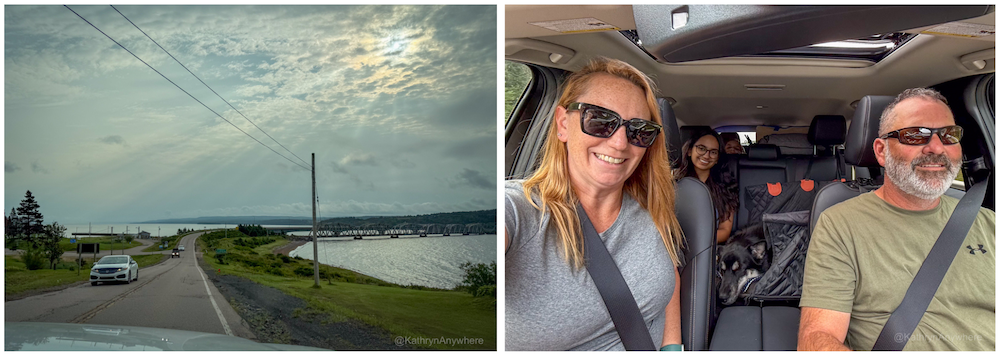
Day two was all about putting kilometres behind us. This was one of our longest driving days, but also the day when the excitement of heading to Newfoundland really started to kick in. There’s something about driving east through the Maritimes that makes me ridiculously happy. The scenery changes, the air feels different, and every kilometre brings you closer to the Atlantic Ocean.
First up, New Brunswick. Now, anyone who knows me knows I have a serious soft spot for New Brunswick. Between the dramatic tides, rugged coastline and outdoor adventures around the Bay of Fundy, I could happily spend days exploring this province. But not today, New Brunswick. We’ve got a ferry to catch.
So we kept driving, crossed into Nova Scotia and made our way to Antigonish, a lively little university town in northeastern Nova Scotia. Antigonish is home to St. Francis Xavier University, and while we weren’t here to explore campus life, it’s the kind of town that makes a convenient overnight stop before continuing toward Cape Breton and the Newfoundland ferry terminal in North Sydney.
Where We Stayed: Homeward Inns of Canada
We checked into Homeward Inns of Canada for the night. Let’s be clear: this isn’t a fancy resort, and nobody is coming here for the luxury experience.
But when you’re travelling with kids, a dog and a vehicle full of road trip gear, sometimes all you need is an economical place to sleep before hitting the road again. Homeward Inns fit the bill.
It’s conveniently located near St. Francis Xavier University, with restaurants and a distillery nearby if you have time to explore a little. Our plan was simple: grab dinner in Antigonish, get some rest and prepare for the next leg of the adventure.
Here’s a hot tip from me to you: If you’re taking the Marine Atlantic ferry from North Sydney to Newfoundland, don’t underestimate the importance of planning your overnight stop. You still have a drive ahead of you in the morning, and ferry check-in deadlines are not suggestions.
After two solid days of driving across Eastern Canada, we were finally getting close.
Next stop: North Sydney, Nova Scotia, and a ferry across the Cabot Strait to Newfoundland!
Day 3: Antigonish, Nova Scotia to Stephenville, Newfoundland
We left Antigonish at 7:00 am; there are a couple of routes through Cape Breton to get to North Sydney. The easiest route is to follow the Trans Canada Highway.
Our ferry was scheduled for 12:15 pm, and we needed to arrive at least 2 hours early. Much like flying at an airport, you have to arrive in time to check in, queue, and be assigned a line for your vehicle to board. If you are late, you could be denied boarding. We were also on a waiting list for a pet-friendly cabin to bring Axel on board, and I wanted to ask at check-in where we were on that list.
Marine Atlantic Ferry: North Sydney to Port aux Basques, Newfoundland
When it’s time, vehicles and passengers board in the queues they have been placed in; it’s not necessarily first-come, first-served. Transports, campers, motorhomes, and other commercial vehicles board as well. And we met cyclists and passengers arriving by ATV when boarding.
Whether you sail overnight or during the day, book a cabin if your budget allows. A real bed and a shower beat trying to sleep in a non-reclining chair every single time.
Hot tip from me to you: Reserve your ferry months in advance if you’re travelling in July or August. The popular crossings sell out quickly.
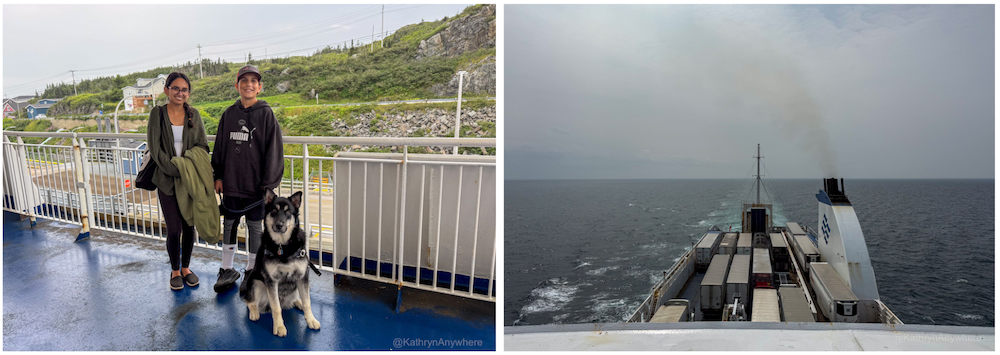
If you’re travelling to Newfoundland with a dog, book your Marine Atlantic pet-friendly cabin as early as possible. Even though we booked our August crossings in December, we were waitlisted both ways because only eight cabins are pet-friendly on board. We lucked out on the crossing to Port aux Basques when two cabins became available after departure, and our return cabin was confirmed just two days before sailing.
Dogs can also stay in your vehicle or use the onboard kennel area, but with Axel still a puppy who tends to chew everything (and me treating him like my third child), having him in the cabin made the 6-hour crossing much less stressful. Pet-friendly cabins allow dogs to stay with you, although they must remain on the floor rather than on the beds, and there is a designated pet relief area on board on Deck 7.
There is a restaurant on board, and if you want to get a taste of cod au gratin and an Iceberg Lager before you make it to the brewery, in Quidi Vidi!
My advice: If a pet-friendly cabin matters to you, book 10–12 months ahead for peak summer travel.
Night 3: Stephenville, Newfoundland
Stay: Airbnb – after being up early and all 5 of us in one hotel room for the past couple of nights, some space to move about and not bump into each other was welcome. When staying in Airbnbs with a dog, filter for dog-friendly on the site and look for fenced yards.
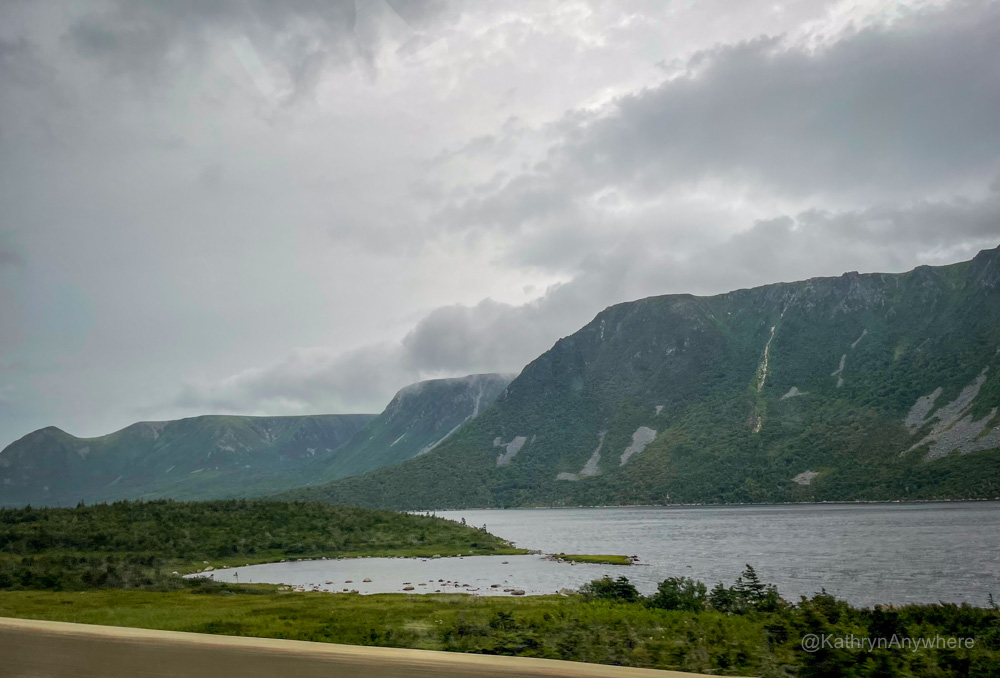
After rolling off the ferry, don’t overcommit. Although the Ontario to Newfoundland road trip might seem complete, there’s a lot to explore. Stephenville is a couple of hours after you get off the ferry, and it’s the perfect place to recover from travel mode before diving into Central Newfoundland. But before you arrive, oh my gosh, look at the landscape! The drive from Port Aux Basques is so pretty! Even in the rain.
Take a walk along the coast at Stephenville Crossing, breathe the salty air, and officially welcome yourself to Newfoundland.
Day 4: Exploring King’s Point → Triton Newfoundland
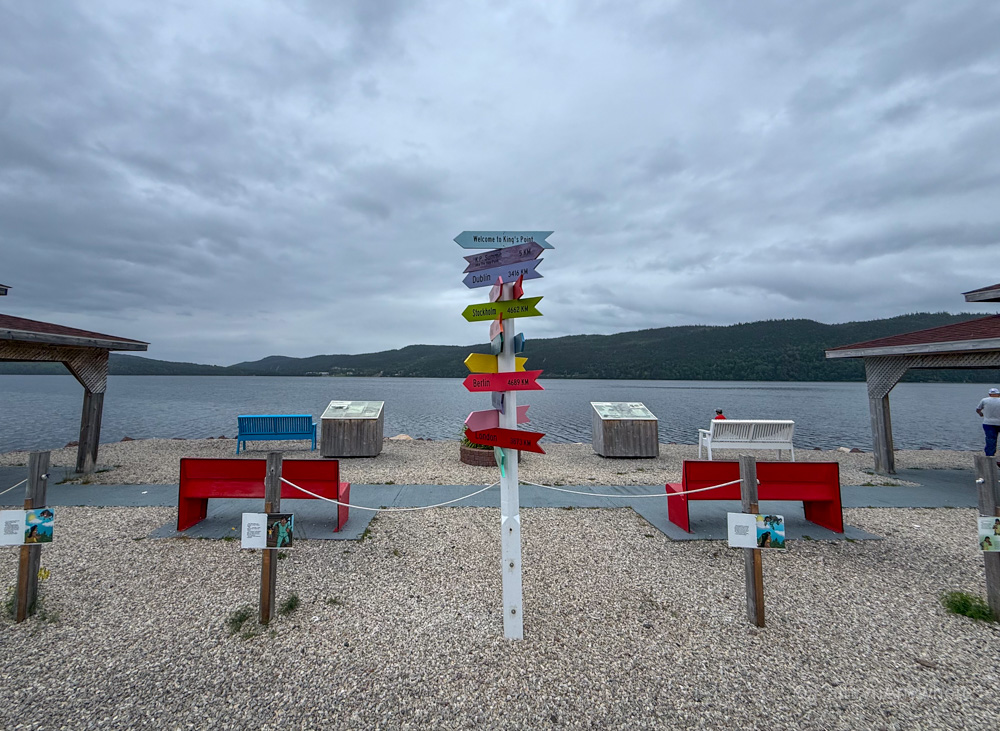
As we headed north into Central Newfoundland from Stephenville, we entered the Green Bay region, a beautiful stretch of coastline on the eastern side of the Baie Verte Peninsula. North of the Trans-Canada Highway, the landscape quickly shifts to deep bays, rugged coastline, thick forest and small coastal communities, including King’s Point, Springdale and Triton, all places worth pulling off the highway for.
Green Bay is also prime Newfoundland territory for spotting whales, seabirds and icebergs when the season is right (we missed the last iceberg by a week!). Two scenic driving routes wind through the region, the Green Bay Route and Green Bay South/Beothuk Trail, making this less of a place to simply drive through and more of a reason to get off the Trans-Canada and explore.
Stop 1: Hiking the Alexander Murray Hiking Trail in King’s Point
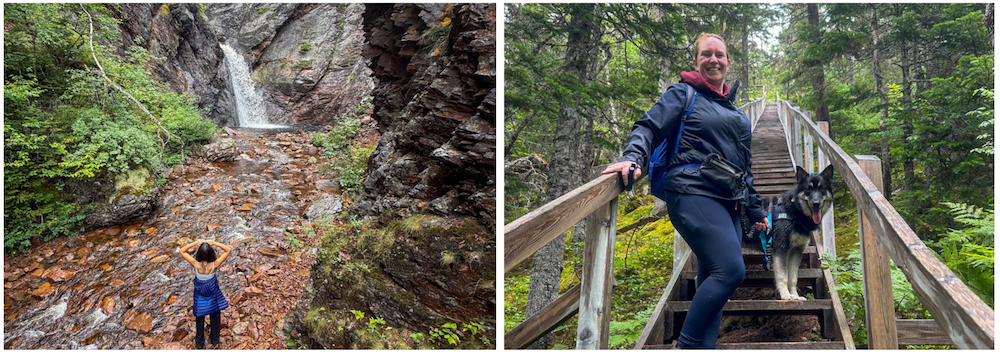
The Alexander Murray Hiking Trail is the signature hike of Newfoundland’s Green Bay region, and if someone tells you there are a lot of stairs, believe them. There are 2,200 of them.
The full loop is roughly 8–9 km and is considered moderately challenging, climbing through forest and barrens to the HayPook summit, with three waterfalls and five lookouts along the way. Newfoundland and Labrador Tourism estimates about three hours to complete the loop, although you’ll want extra time for waterfalls, viewpoints and photos. I think you should take more time.
My daughter, Axel and I recorded 6.91 km with 253 metres of elevation gain. Because of the immense rain we were in, and with the dog, we couldn’t do the full loop. We made it to Corner Brook Falls, Corner Brook Gorge and then headed back. Whatever number your GPS ultimately spits out, though, the defining statistic is still those 2,200 stairs. Your legs will know about them.
Please note: there is no cell phone service here, so please come prepared.
Alternative activity: Shore Fishing in King’s Point
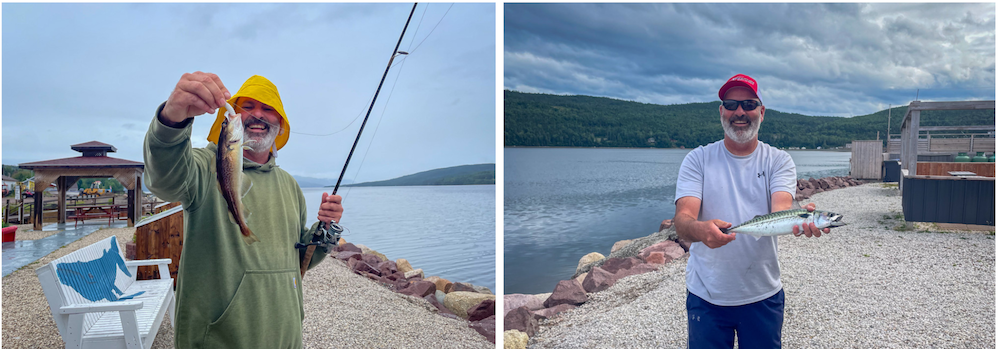
Pack a fishing rod! For those not into hiking but who want to get a taste of what Newfoundland and Labrador is all about, shore fishing right in town is a good place to get your feet wet… I mean, get acquainted with the culture!
King’s Point is a great place to try shore fishing, casting into the waters of Green Bay from the shoreline and local wharf areas. Depending on the season, you may encounter species such as mackerel or cod, and honestly, standing on a rocky Newfoundland shore with a fishing rod in hand is an experience in itself.
Fishing seasons, catch limits, and regulations vary by species and can change annually, particularly for recreational cod fishing, so check the current Fisheries and Oceans Canada regulations before casting a line.
Lunch: By the Sea Inn and Cafe
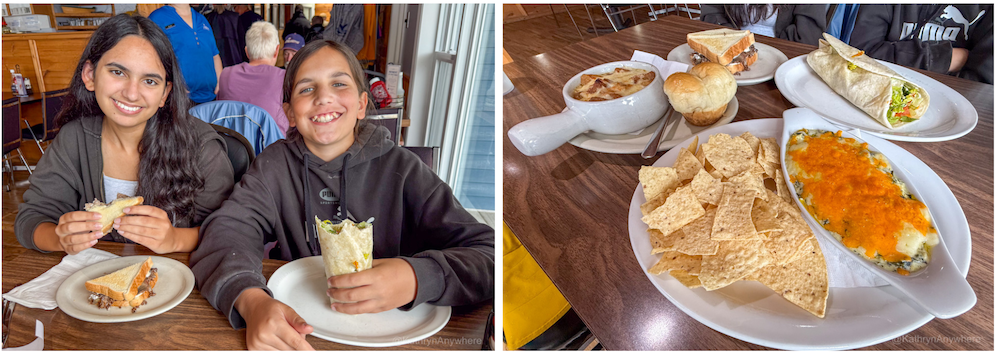
In smaller coastal towns, dining options are limited, but By the Sea Inn and Cafe was a great spot with decent food. On a rainy day, the French Onion Soup really hits the spot. One thing is certain in Newfoundland: rain and fog are common. A great meal in the right environment makes it all better!
Stop 2: See a Giant at the Triton Sperm Whale Pavilion
About 45 kilometres off the Trans-Canada Highway, and an hour from King’s Point, Triton is worth the detour, especially for a stop at the Triton Sperm Whale Pavilion, which you’ll spot as you enter town. It’s exactly what it sounds like: a giant sperm whale skeleton overlooking the harbour. Equal parts fascinating and wonderfully quirky.
If I could go back in time, I would have set aside more time to explore this area.
Dinner: Bumblebee Bight Inn & Brewery
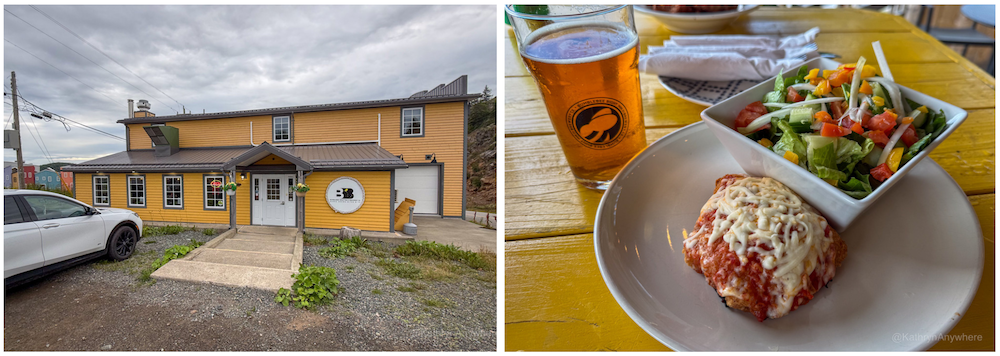
A craft brewery on Pilley’s Island with ocean views? Don’t mind if I do. The restaurant was super busy when we walked in, which is a good sign of a beloved place, but it’s also a sign of a wait for service. All is well that ends well; we ate, got beer and bought hoodies to memorialize our time here! Bonus – the patio is dog-friendly.
Stop 3: Sunset Boat Tour with Clarey’s Diving and Eco Tours
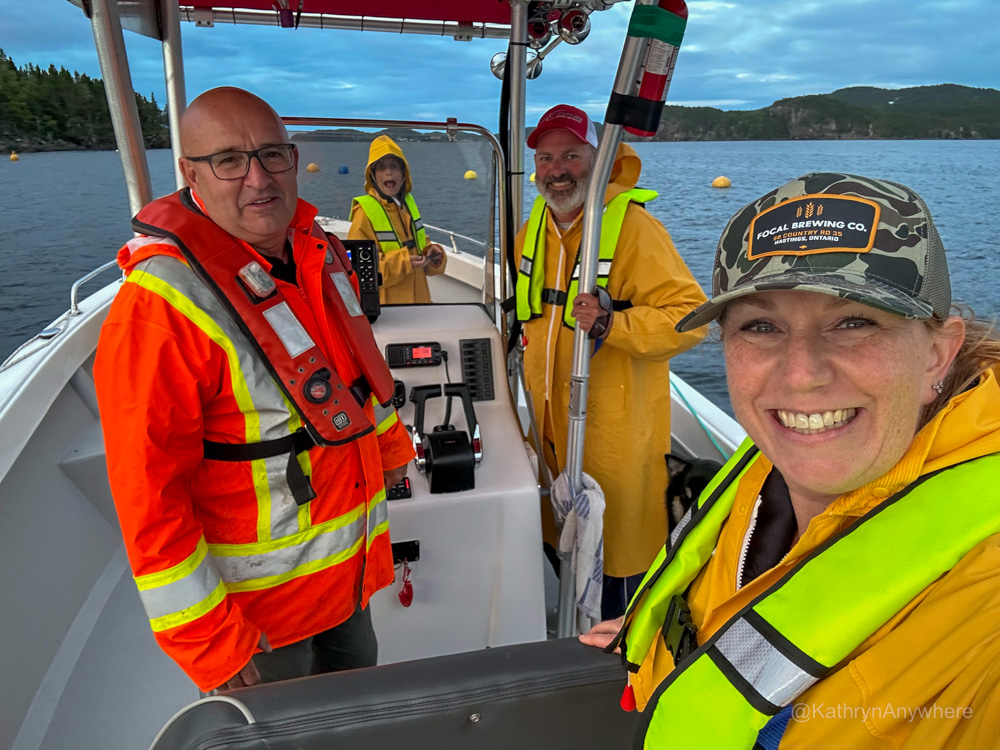
If you really want to understand Triton, get out on the water with Clarey Roberts with Badger Bay Boat Tours. Clarey Roberts is one of the most animated and cheerful characters we crossed paths with in all of Central Newfoundland, and touring with him feels less like a formal boat tour and more like heading out with a local who can’t wait to show you his backyard. Born and raised in the area, he’s been running tours out of Triton for 4 years with his brother, Mike. Depending on the season and conditions, a trip on the water can mean whales, icebergs, waterfalls, mussel farms, fishing or exploring some of the landmarks tucked along the coast.
And Clarey knows everyone. As we travelled along the coast, a story attached to seemingly every cove, boat, house, and person. He knows who grew up here, who works here, who works away and what’s happening around the community. That local connection adds something you simply can’t get by looking at the coastline from shore.
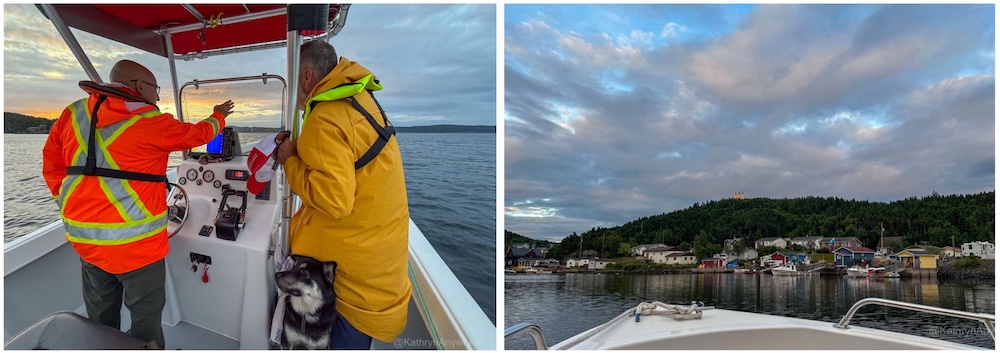
He’s also a diver and knows the region above and below the water. He knows how many stockings are in the mussel farm, what it harvests and when. Clarey can also take you fishing and for a full boil-up if you want. You haven’t lived until you’ve done a Newfoundland boil-up!
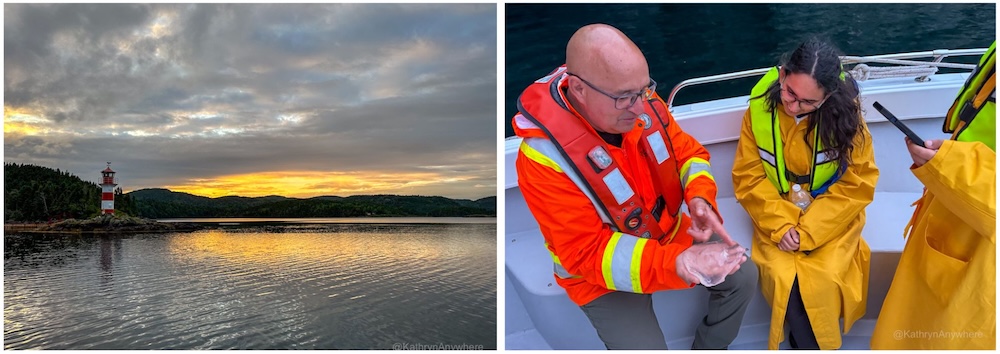
This isn’t a big sightseeing boat where you’re watching everything from a distance. The boat itself is small and intimate, which is exactly what I loved about it. You’re close to the water. So close, Clarey can reach over and grab a jellyfish. You feel the spray on your face and can tuck into coves and get a completely different perspective of Triton’s rugged coastline. This is a small, intimate boat, and you’re close to the waves.
But if you can, go out on a boat tour at sunset. There’s something about being in that little boat as the light starts dropping over the water, feeling the ocean spray and listening to Clarey tell stories about the place he calls home.
The scenery is spectacular. Clarey makes you feel like you’re part of it.
Night 4: Triton, Newfoundland
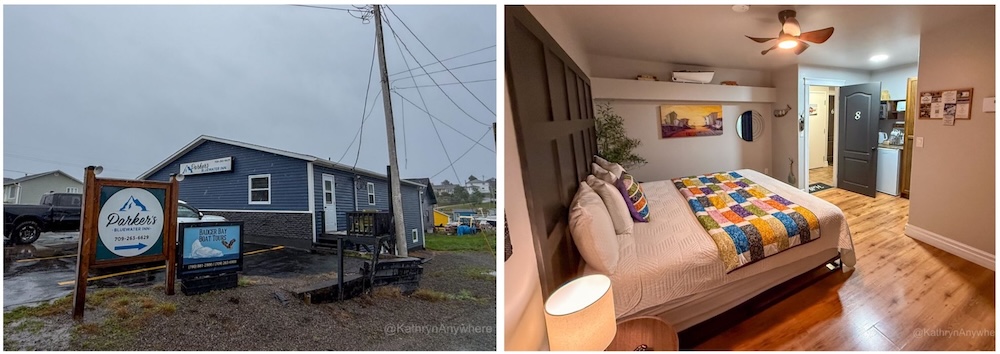
For our night in Triton, we stayed at Parker’s Bluewater Inn, a small five-room inn on Main Street, just steps from the water. It’s simple, comfortable and well-positioned for exploring Triton and the surrounding Green Bay area, exactly what we needed after a full day of hiking and road-tripping. The jacuzzi tub was a nice touch!
With only five rooms, this isn’t a big hotel experience. It’s a small-town Newfoundland stay that puts you right in the community, with the harbour outside your door. We had rooms 7 and 8.
Room #7 – Luxury Suite – This room features a king bed for 1-2 people, a corner jacuzzi tub, TV, small mini fridge, microwave, sofa, private deck, and private bathroom.
Room #8 – King Bed – This room features a king bed for 1-2 people to sleep, a small deck, a small mini fridge, a microwave, a TV, and a private bathroom.
Having a room with a private door to the outside world is really handy when travelling with pets!
📵 Know Before You Go: Cell Service
One quick note: Central Newfoundland has spectacular scenery. Cell service? Not so much. Download your maps or invest in some good old-fashioned paper maps (remember these?)
before leaving town, and don’t assume Google, Waze or Apple Maps will be there to save you.
Day 5: Triton Newfoundland → Grand Falls – Windsor
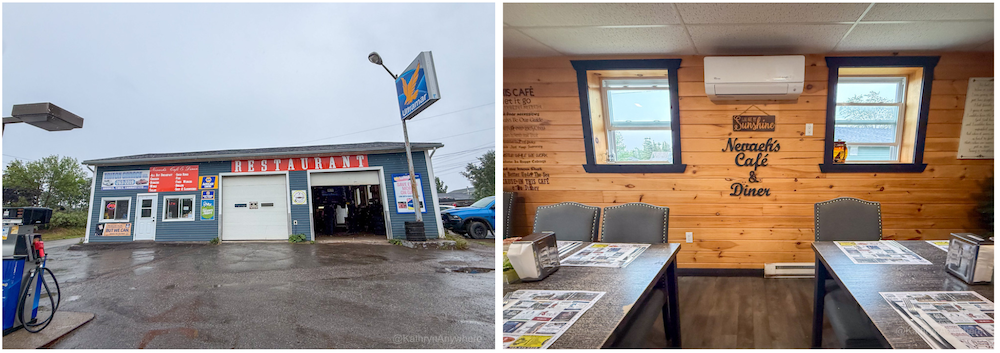
After breakfast at Nevaeh’s Café (a cafe inside a gas station and mechanic garage), we headed inland toward Grand Falls-Windsor for one of the biggest adrenaline hits of our Central Newfoundland road trip.
At Nevaeh’s, there was a group of men from the town in there having their morning coffee. They’re retired now; all of them had put in more than 35 years each on the boats and working away. This is where they gather to catch up.
Stop 1:Rafting on the Exploits River
After an hour and fifteen-minute drive, we arrived, and Miss M and I geared up at Rafting Newfoundland’s Badger location with PFDs, helmets and paddles before heading to our drop-off point for roughly four and a half hours on the river.
And this wasn’t four and a half hours of simply floating downstream. The Badger Chute delivers plenty of splashes and excitement, but the rapids themselves are surprisingly approachable.
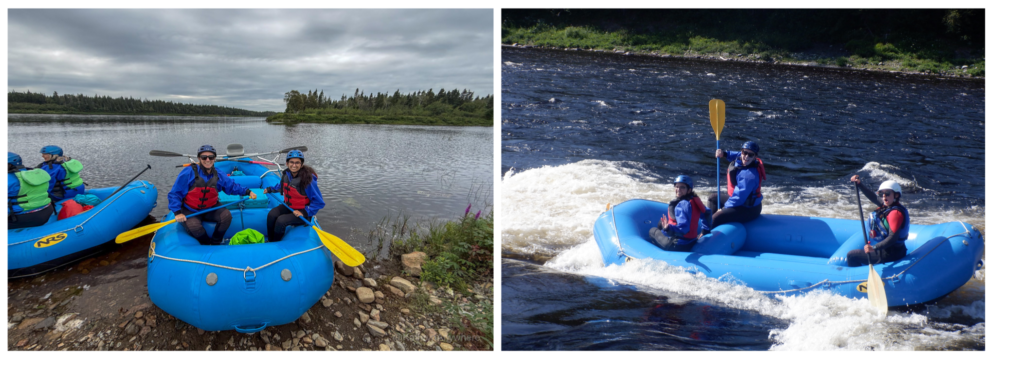 We paddled through the rapids, surfed into waves and bounced our way through the Badger Chute, with the option to jump into the river for a swim along the way. As we paddled down the river, we spent a lot of time looking for moose along the shore, as some were rumoured to have been spotted earlier that week. Toward the end of the trip, we pulled up on a rocky island in the middle of the Exploits for lunch.
What surprised me most was how family-friendly the experience was. You still get the adrenaline and excitement of whitewater rafting, but it’s an adventure that older kids and teens can absolutely get into.
Newfoundland from the highway is beautiful. Newfoundland from the river? WAY more fun.
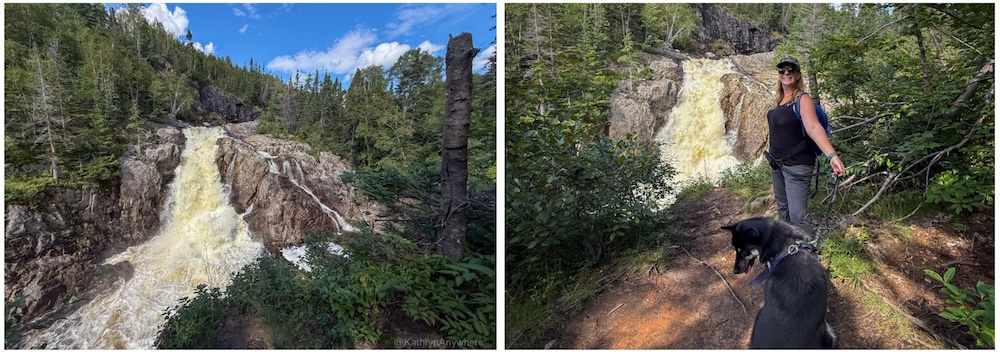
Bonus Stop: Thunder Brook Falls: A Waterfall Worth Pulling Over For
Tucked just off the Trans-Canada Highway between Badger and Grand Falls-Windsor, Thunder Brook Falls is one of those places you’d probably drive right past if you didn’t know it was there. The turnoff is easy to miss, signage is practically nonexistent, and you’d never guess there’s a beautiful waterfall waiting just a short hike into the woods.
It’s the kind of spot locals bring their kids to cool off on a summer day, with a swimming hole at the base of the falls. And honestly, I can see why! The day we visited, the trail was MUDDY. Like, watch where you put your feet muddy. But the waterfall itself was gorgeous, surrounded by lush greenery and well worth getting our boots dirty.
If you’re travelling through Central Newfoundland, add this little detour to your itinerary. Just don’t expect a big roadside sign announcing you’ve arrived.
Stop 2: Exploits Extreme Zipline
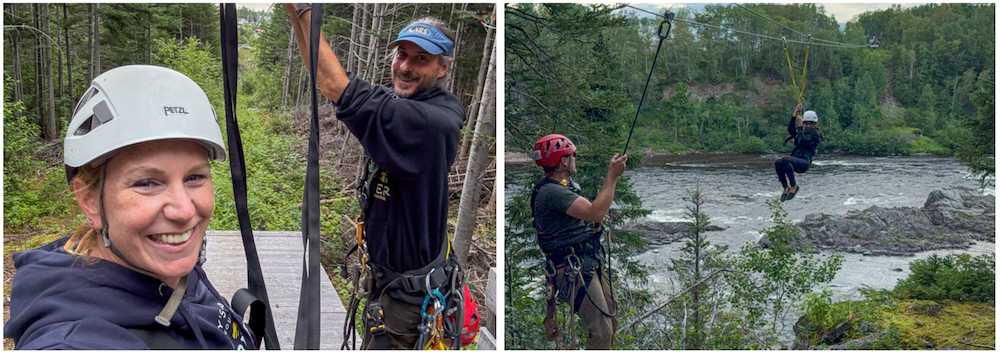
If rafting the Exploits River gets your adrenaline going, wait until you’re flying over it.
If there’s one adventure from this trip that Maeve and I still talk about, it’s the Exploits Extreme Zipline. Exploits Zipline takes you high above the river, and seeing that rushing water beneath your feet is a completely different kind of thrill. There’s that split second when you step off the platform, and your stomach drops, and then you’re flying. I couldn’t help but scream. Not a terrified scream. A full-on, THIS IS SO MUCH FUN scream.
There’s something pretty spectacular about experiencing the Exploits River from both perspectives: crashing through its rapids and then soaring high above them.
Here’s a hot tip from me to you: if you have the time, don’t try to cram rafting and ziplining into the same day. Give each experience its own day. You’ll have more time to enjoy both without watching the clock, and you’ll get two completely different days of adventure on the Exploits River. Trust me, they’re both worth it.
Dinner: Lefty’s Pizzeria
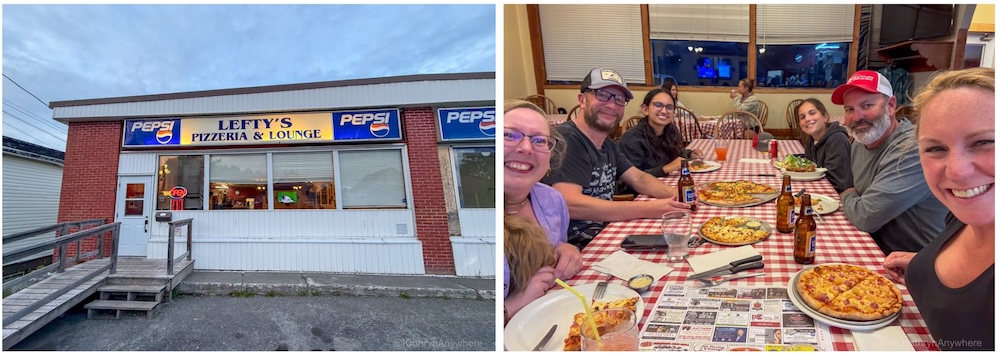
If you Google the best pizza in Grand Falls-Windsor, Lefty’s Pizza is likely to pop up pretty quickly. And after eating there, I can see why. But here’s what I loved most about Lefty’s: it wasn’t just the pizza.
It’s the kind of place where locals gather, everyone seems to know everyone, and the servers remember your order. No fuss, no pretension, just good food and a whole lot of small-town Newfoundland charm. And that, my friends, is exactly the kind of place I love finding when I’m on the road.
I got my Hawaiian pizza fix, we ordered wings for the table, and settled in while the restaurant filled up with locals fresh from their soccer and softball games. Teammates catching up, familiar faces greeting each other, and us happily sitting in the middle of it all. There’s something about eating where the locals eat that makes you feel a little more connected to a place. You’re not just stopping for dinner. You’re getting a glimpse of the community.
And if that comes with a really good Hawaiian pizza? Even better. If you’re spending a night in Grand Falls-Windsor, put Lefty’s on your list.
Night 5: Grand Falls-Windsor
Stay: Airbnb – I’m becoming more of a convert to Airbnbs over time. Hotel rooms are awesome, don’t get me wrong, but the couches are rarely as comfortable in a hotel room as a living room. Morning Kuerig coffee on a living room couch is becoming more my speed. Same with separate sleeping spaces for the kids when we travel!
Day 6: Grand Falls – Windsor, Newfoundland → Hare Bay → Gander
This was supposed to be the day we went shark tagging. Instead, it became one of those travel days where absolutely nothing goes according to plan, and somehow you come away with a better story because of it.
We headed out with The Shark Co. from Hare Bay on what turned out to be, weather-wise, probably the worst day of the entire week to be on the water. And we ALL got seasick.
I need to put this into perspective: I don’t have a weak stomach. I don’t get motion sick (unless I’m in a Tesla being driven erratically). I basically never puke. I’ve spent plenty of time on boats, and I have never been seasick.
I was the first one down. That should tell you something about the conditions.
Before the Sharks: Bragg’s Island
After leaving Hre Bay and before heading farther out to find sharks, we tried to escape the wind; we came through Long Tickle and stopped at Bragg’s Island, a former fishing community on the north side of Bonavista Bay.
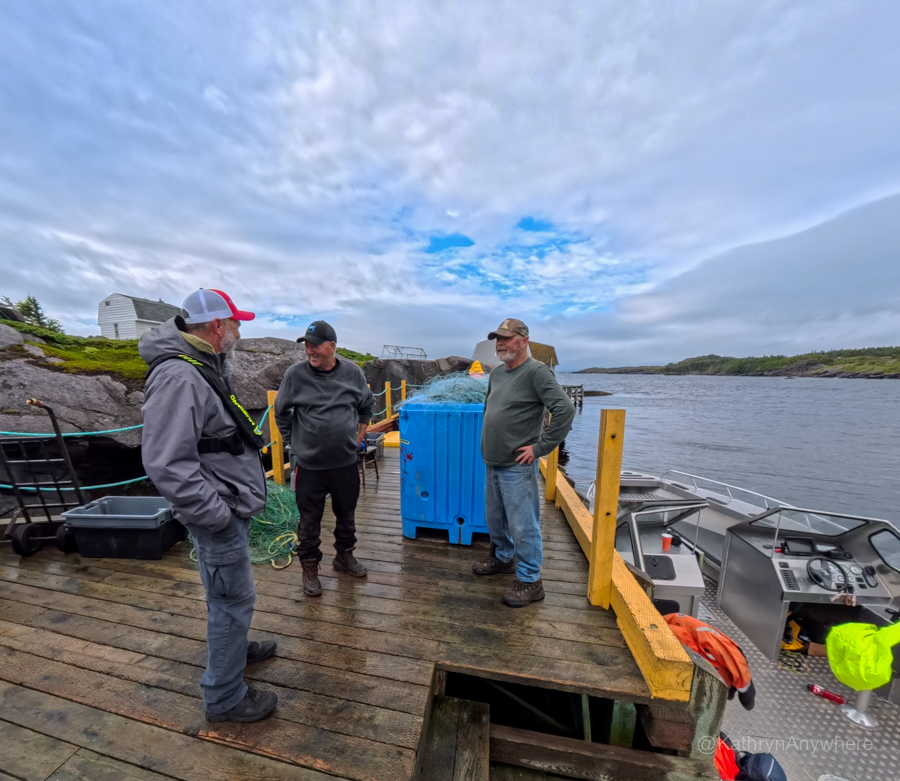
Alec Oram, our captain and guide with The Shark Co., was born here, and saying he’s proud of where he comes from feels like an understatement. Like so many of Newfoundland’s remote outports, Bragg’s Island was resettled in the 1950s. Families were moved from the island to mainland communities for education, healthcare and economic opportunities, and eventually the community that had existed here for generations disappeared.
Except the connection to Bragg’s Island didn’t. As we walked around the island, Alec showed us where his family home once stood and told us about growing up here. Bragg’s Island wasn’t simply an interesting piece of Newfoundland history to him. This was home. And leaving it wasn’t easy. When the community was resettled in the 1950s, Alec’s family moved to the mainland. His father was ill, work was scarce, and the family wasn’t happy about leaving. This wasn’t a romantic story about packing up and starting somewhere new. They left behind their home, their community, and a way of life.
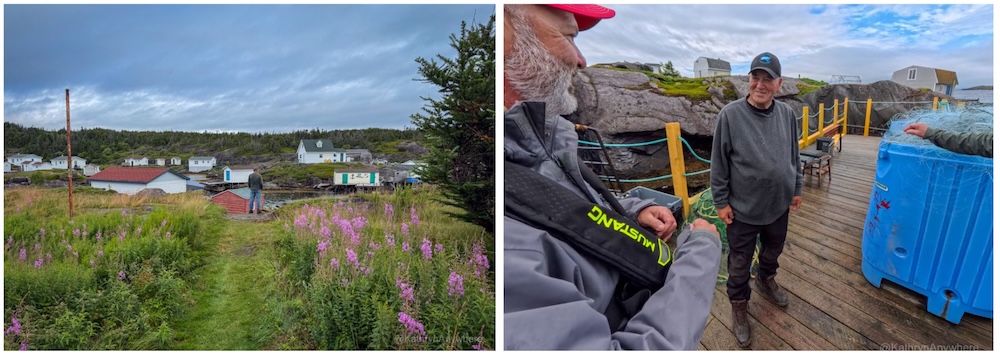
Alec persevered. He went on to spend his life fishing off Newfoundland, at a time when fishermen generally didn’t care much about sharks. People saw sharks as dangerous nuisances that interfered with fishing and were often killed when caught.
Then Alec’s son Bryan came along with a very different idea. Bryan founded The Shark Co. in 2011, catching, tagging and releasing sharks as part of conservation and research efforts. And somewhere along the way, Bryan changed his father’s mind about sharks. Alec watched his son handle these animals differently. Instead of killing them, Bryan tagged and released them. He was learning from them. Alec began to see the animals he’d encountered throughout his fishing career differently.
That shift has extended beyond father and son. Through their work, the Orams are helping change attitudes toward sharks within their own fishing community while creating a tourism experience that brings visitors to this small corner of Newfoundland.
But there’s another part of Alec’s story that I loved. He’s going home.
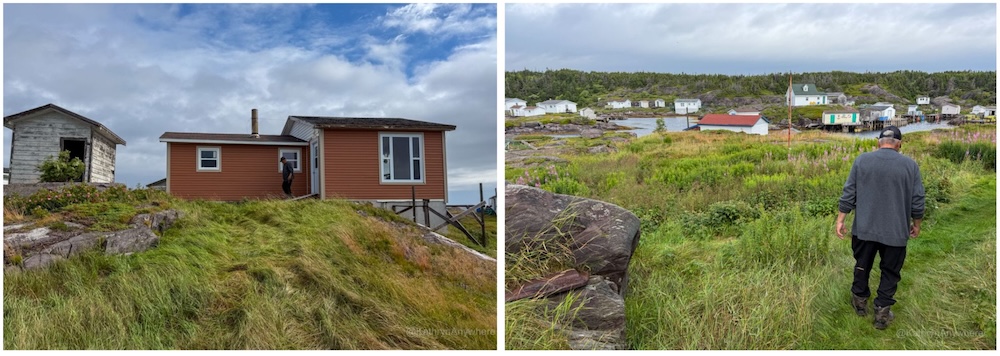
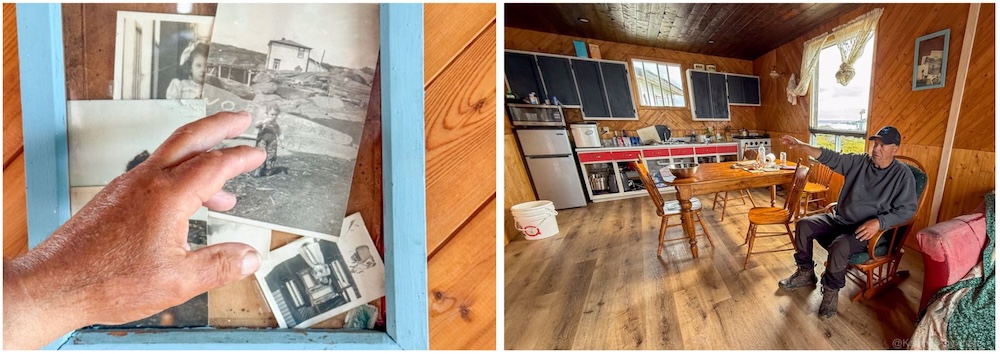
At 75 years old, Alec took us to the house he’s building on Bragg’s Island. Decades after his family had to leave, he’s putting down roots on the island again. Inside the home he is building is a photo of him as a child with his childhood home behind him. As he stood there, talking about what he’s building and everything he still plans to do, there was no sense that Alec was looking backward or trying to recreate something lost.
He was talking about the future. This man has plans. And absolutely no intention of slowing down.
I went out that day thinking the story would be about sharks. Before we even started fishing for them, Alec gave me a much bigger story, about home, resilience, changing your mind, and finding your way back to where you started.
And Then We Went Looking for Sharks
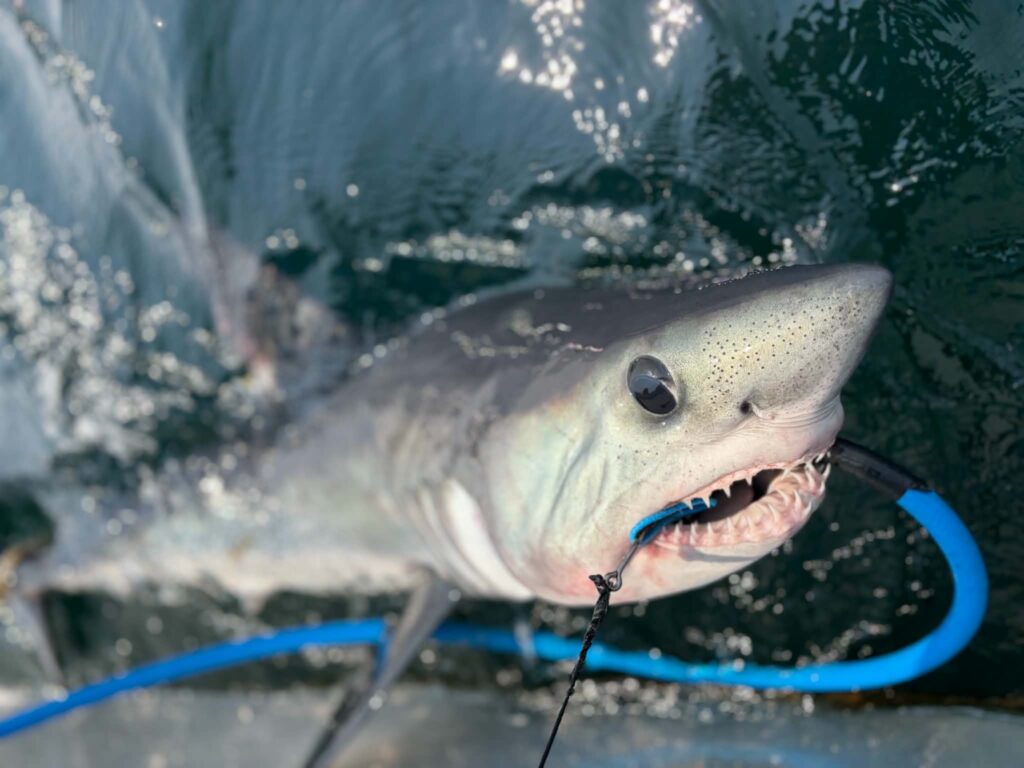
The purpose of our day with The Shark Fishing Co. was shark fishing and tagging, an experience that lets visitors participate in conservation work while researchers collect valuable information about sharks in Newfoundland waters. We headed out past Offer Island to an area they call Offer Grounds, which is shallow and good for cod fishing. We were hoping to reel in a Blue Shark.
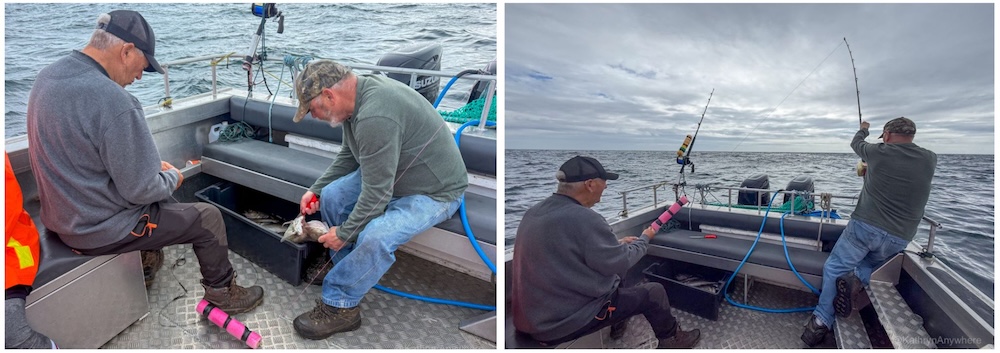
But wildlife doesn’t work to an itinerary, and we didn’t catch a shark.
We did, however, battle some serious waves, jig for cod, toss a lot of chum into the water, collectively lose our breakfasts and discover exactly how quickly the North Atlantic can humble an entire boat full of people (except for the experienced captain and his first mate, Steve).
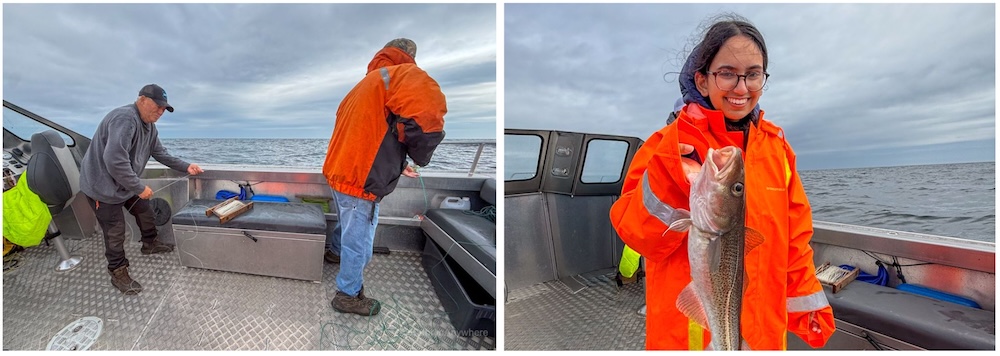
Would I have loved to see and tag a blue shark? Absolutely. But not catching one doesn’t make the experience any less worthwhile. That’s the reality of any ethical wildlife experience: there are no guarantees.
And strangely, when I think about that day, the sharks we didn’t see aren’t the first thing I remember.
I remember Alec standing on Bragg’s Island, showing us where his childhood home once stood, and then where he’s building his future.
A Stop in Gambo: Scenic Views and a Doggy Daycare Find
On our way to Hare Bay for our shark-tagging adventure, we made a stop in Gambo, a small Newfoundland town with some pretty spectacular scenery and a little piece of provincial history.
First up was Joey’s Lookout, named after Joseph R. Smallwood, Newfoundland’s first premier and a driving force behind the province joining Confederation in 1949. Smallwood was born in Gambo, and the lookout honours the town’s most famous son. The view? Absolutely worth pulling off the highway for.
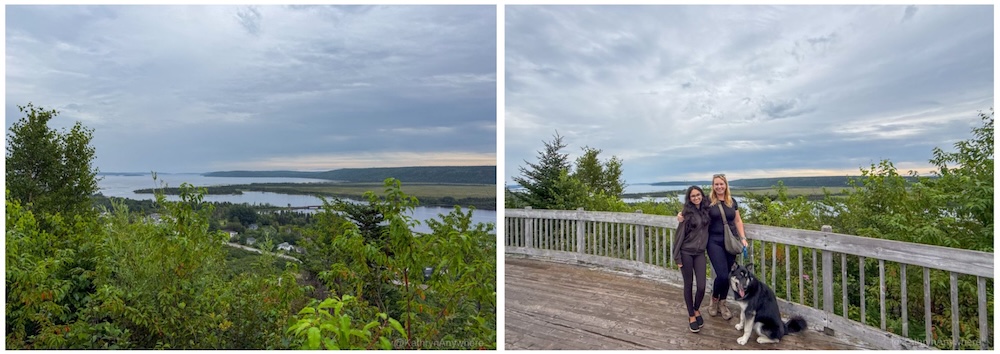
From the lookout, you get a sweeping view of Gambo and the surrounding landscape. It’s one of those stops that doesn’t take much time but rewards you with a fantastic perspective. But Gambo also served another very important purpose on our Newfoundland road trip…
We found Axel a dogsitter!
Travelling across Newfoundland with a dog is fantastic, but some adventures just can’t include your four-legged travel companion. Shark fishing in the North Atlantic? Definitely one of them. Thankfully, we found RiBbon’s Doggy Day Care in Gambo, where Axel could spend the day being looked after while we headed out to Bragg’s Island to search for sharks with The Shark Fishing Co.
Having a reliable place for Axel to stay meant we could enjoy a dog-unfriendly adventure without worrying about him. If you’re road-tripping through Central Newfoundland with your dog, don’t assume you’ll have to skip pet-unfriendly experiences. Look into local doggy daycare options along your route. Finding RiBbon’s in Gambo made our shark-tagging day possible.

Night 6: Quality Hotel & Suites, Gander, Newfoundland
After a full day exploring Bonavista Bay, learning about Bragg’s Island, and discovering that even my supposedly iron stomach can’t handle a rough day on the North Atlantic, we headed to Gander for the night.
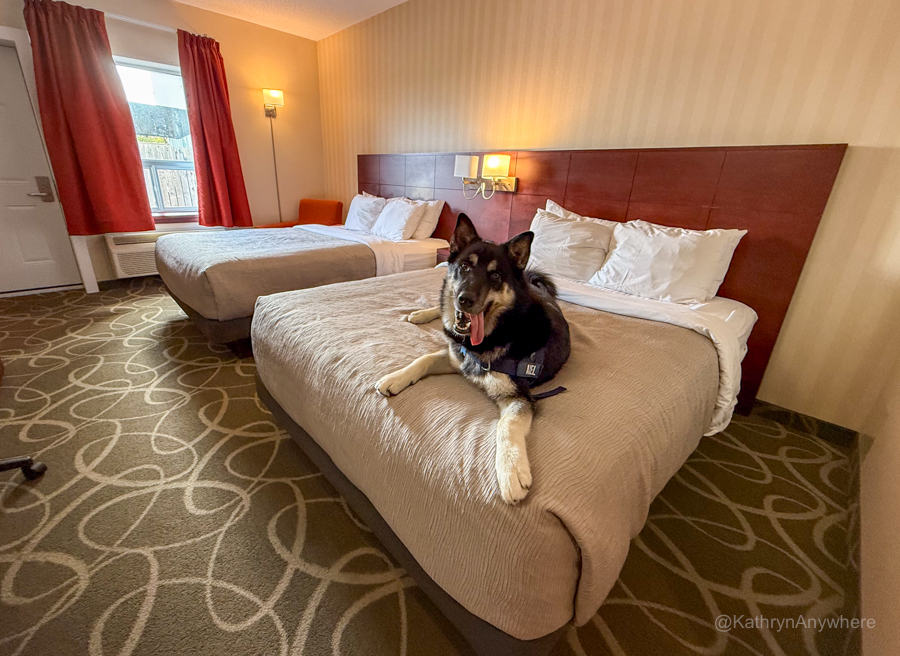
Our home base was the Quality Hotel & Suites, a convenient overnight stop on our journey across Central Newfoundland. Gander is a practical place to spend the night when travelling through this part of the province, with restaurants, services and easy access to the Trans-Canada Highway.
And after the day we’d just had? A comfortable bed, a hot shower and absolutely no more time on a boat were all I needed. Can confirm we arrived at the hotel and didn’t leave until the next morning.
Travelling with a pet? Be sure to get a main floor room with outdoor access.
Day 7 Gander, Newfoundland → Salvage & Eastport
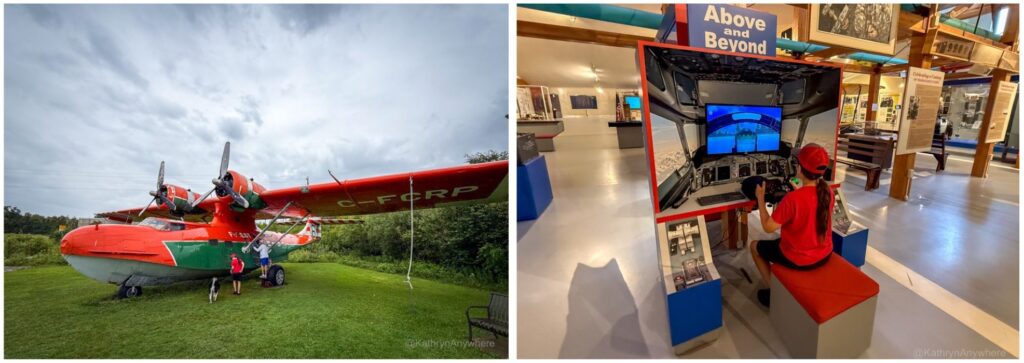
We hadn’t even made it off the highway in Gander when my 12-year-old son spotted the planes outside the North Atlantic Aviation Museum.
“CAN WE GO THERE? PLEEEEEASE?!” And just like that, our itinerary had a new stop. The kid loves planes, mechanics and pretty much anything to do with aviation, so this was his dream stop. And while I knew he’d be in his element, I didn’t expect how much this museum would affect me.
Gander was once known as the “Crossroads of the World,” a major refuelling stop for transatlantic flights in the 1940s and 50s. From famous passengers to the fascinating role women played in aviation during WWII, this small museum packs a surprising amount of history.
Gander’s Role on September 11, 2001
The Safe Haven exhibit, dedicated to Gander’s extraordinary response to September 11, 2001, was what really got me. When North American airspace closed, 42 flights were diverted to Gander, leaving thousands of stranded passengers in the care of this small Newfoundland community. The exhibit tells that story through letters, recordings, memorabilia and artifacts, including a piece of steel from the World Trade Center.
Having worked on several CBC productions commemorating the tenth anniversary of 9/11 in 2010 and 2011, I knew Gander’s story well. But standing in the very community that opened its doors to thousands of strangers brought it all back in a way I hadn’t expected. I got emotional. It’s one thing to know the story. It’s another to stand where it happened and see how an entire community’s kindness became part of history.
My son came for the planes. I left with much more than I bargained for.
Salvage: A Fishing Village, a Brewery and One Spectacular Coastal Hike
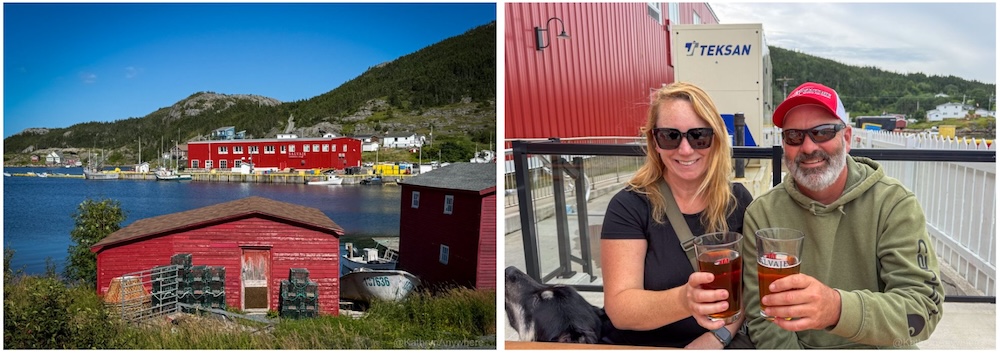
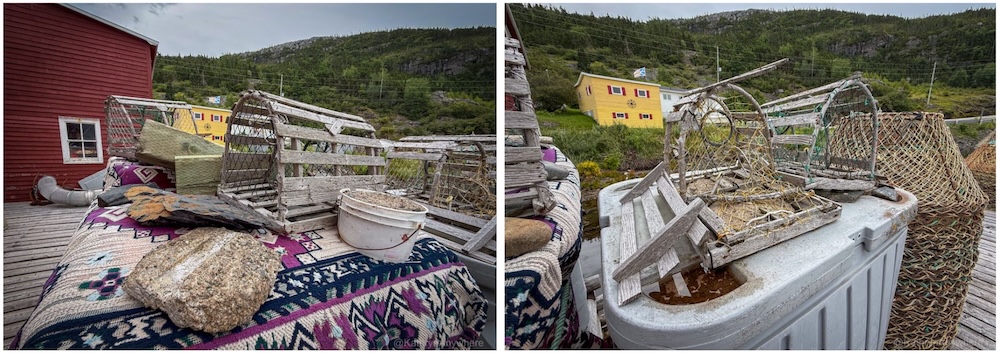
About 90 minutes from Gander, we rolled into Salvage, one of those ridiculously pretty Newfoundland fishing villages that makes you want to abandon your itinerary and stay awhile. Like, maybe uproot yourself and move to Newfoundland kind of place. Colourful houses, fishing boats, a sheltered harbour and that unmistakable outport charm. It didn’t take long before Miss M announced she could absolutely see us having a summer home here. I could get on board with that plan.
Our first stop was The Longhouse, a former fish processing plant that’s been given an entirely new lease on life. Like so many Newfoundland outports, Salvage was affected by the closure of its fish plant. But instead of letting the building sit empty, the community transformed it into something remarkable: a coffee shop, microbrewery, restaurant, Canada Post outlet, and municipal offices, all under one roof. And it’s thriving.
The bigger vision for Salvaje Longhouse includes expanded dining and accommodations, making this little harbourfront property a destination in its own right.
The Longhouse has become a gathering place for locals and visitors alike, breathing new life into a building that once played such an important role in the community. Naturally, we stopped for a bite to eat and a Damnable Ale from one of Newfoundland’s newest breweries. Because when a former fish plant becomes a brewery, I’m going to need to investigate.
Hiking the Damnable Trail
With lunch behind us, Miss M and I laced up our hiking boots to tackle part of the Damnable Trail, a network of coastal hiking trails around Salvage and the Eastport Peninsula. The trail network winds through historic Salvage, with side paths leading to scenic lookouts, old graveyards and heritage sites. Our route took us from views overlooking Salvage Harbour to Bishop’s Harbour, then out to Net Point, where the scenery drops your jaw. Think rugged cliffs, rocky headlands, sweeping Atlantic views and colourful fishing houses tucked into the harbour behind you.
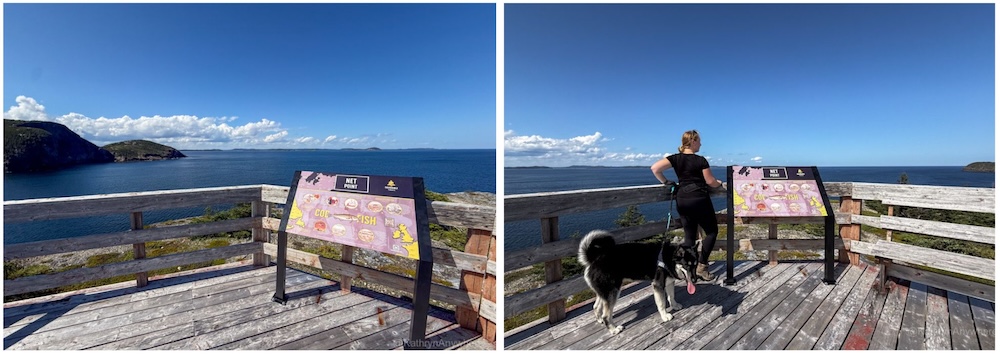
Depending on the season, you might even spot whales, icebergs or seabirds offshore. We didn’t need any of those extras to be impressed. The coastline alone was spectacular. It’s a moderate hike with some uneven terrain, but absolutely worth the effort. With multiple paths and lookouts to explore, you can tailor your hike to your time and energy.
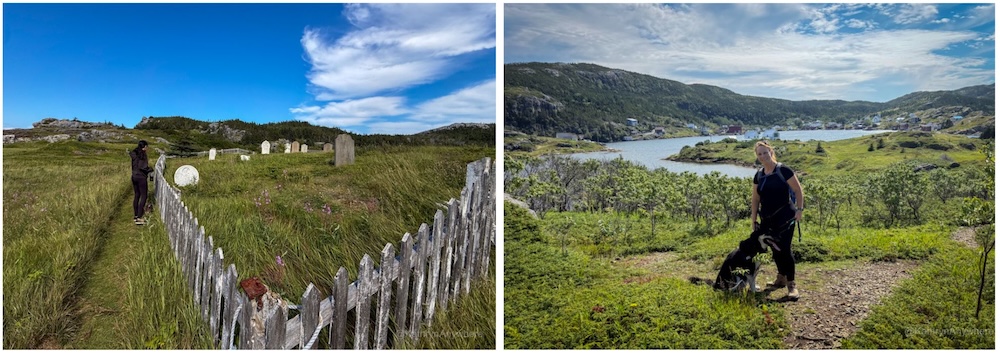
Between the colourful fishing village, the community spirit at the Longhouse and those spectacular coastal views, Salvage turned out to be one of my favourite stops on our Newfoundland road trip and a place I wished we could have stayed longer. If that summer home in Newfoundland idea ever becomes a reality, it was because of this day right here.
Eastport Beach: Wait, Newfoundland Has Sandy Beaches Too?
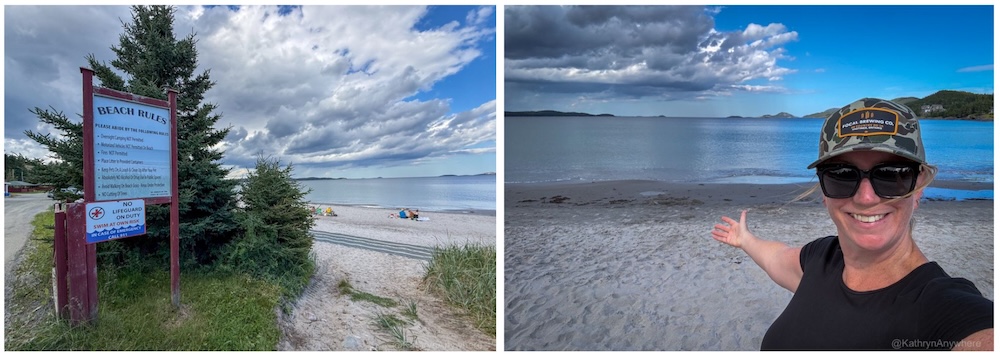
As if Newfoundland doesn’t already have enough going on with its rugged coastlines, towering cliffs, waterfalls, forests and incredible wildlife, did you know it also has beautiful sandy beaches? Yep. Actual sandy beaches. And Eastport Beach is a perfect place to kick off your hiking boots and enjoy a little downtime.
Located on the Eastport Peninsula, this nice stretch of sand comes with plenty of amenities, including picnic tables, benches, change rooms, washrooms and showers. There are also Mobi-Mats to make the beach more accessible for visitors with different mobility needs, plus a freshwater brook where kids can splash around.
And if sitting still isn’t your thing (guilty!), a boardwalk and nature trail connects Eastport Beach to nearby North Side Beach, one of the starting points for the High Tide section of the Damnable Trail.
So yes, you can spend your morning hiking Newfoundland’s rugged coastline and your afternoon relaxing on a sandy beach.
Not a bad way to spend a day in Central Newfoundland.
Continue to St. John’s… or Slow Down
Sure, you could keep driving east to St. John’s. It’s only 3 hours from Eastport. And if you have the time, you absolutely should visit Newfoundland’s capital. But here’s my best piece of advice: don’t treat Central Newfoundland as a stretch of highway you have to get through to reach somewhere else.
Between the waterfalls, coastal hiking trails, colourful fishing villages, rafting, and unexpected roadside stops, there’s an incredible amount to discover here. And that’s before you factor in the people. People like Clarey, who knows the coastline around Triton like the back of his hand. Or Alec, who spent a lifetime on the water and is now building a new home on the island where he grew up. Or the communities finding creative ways to keep their fishing village heritage alive.
Those are the stories that stayed with me.
We came to Newfoundland looking for adventure, and we certainly found it. But some of my favourite memories weren’t the ones I’d carefully planned before leaving Ontario. They were the conversations, the detours, the places we almost drove past and the moments that made us wish we had just one more day.
So by all means, keep going to St. John’s to the east. Explore Gros Morne in the west. See as much of this spectacular province as you possibly can. Just don’t make the mistake of thinking the best of Newfoundland is waiting somewhere farther down the road.
🎒 What I’d Pack for This Newfoundland Road Trip
Newfoundland weather likes to keep you guessing. Add hiking, rafting, beaches and whale watching into the mix, and you’ll want to pack for a little bit of everything.
🚗 Road Trip Essentials
✓ Rain jacket
✓ Lots of layers
✓ Paper/offline maps
✓ Motion sickness medication
🥾 Adventure Gear
✓ Dry bag
✓ Water shoes
✓ GoPro or waterproof camera
✓ Binoculars for whales
Thinking about driving from Ontario to Newfoundland but wondering if you’ve completely lost your mind? I get it. It’s a LOT of kilometres, a ferry crossing, and some serious logistical gymnastics, especially when you’re travelling with two teenagers and an energetic rescue dog.
Before we hit the road for Newfoundland, we did a whole lot of planning.
Newfoundland is worth every single kilometre, and Central Newfoundland deserves a whole lot more attention than it gets. This part of the province is packed with waterfalls, rugged coastal hiking trails, colourful fishing villages, incredible boating adventures and communities with stories worth stopping to hear. And we barely scratched the surface.
The drive from Ontario doesn’t have to be the boring part of the vacation, either. With the right stops, the journey becomes part of the adventure.
After making the journey ourselves, I’ve got answers on how long to go, when to travel, what to book ahead, and what I’d do differently. Because once Newfoundland gets into your head and you’ve decided you’re going, the next question is usually, “Okay, but how do we actually pull this off?”
Glad you asked. Here’s what you need to know before pointing your vehicle east and heading for the Rock.
Ontario to Newfoundland Road Trip FAQs
Planning your own adventure? Here are the answers to some of the questions I had before hitting the road.
How many days do you need to drive from Ontario to Newfoundland?
Our road trip itinerary covered eight days and seven nights, including the drive east and our Newfoundland adventures. If you have the flexibility, I’d stretch it to 10–12 days or longer to fit in more hikes, coastal stops and time to explore.
Is the drive to Newfoundland family-friendly?
Absolutely! We travelled with two teenagers and our rescue dog, Axel. Between waterfalls, coastal hikes, rafting, boat tours and plenty of roadside discoveries, there was something for everyone. Just plan breaks between those longer driving days.
When is the best time to visit Newfoundland?
June through September is generally a great window for road trips and hiking. July and August are popular for summer adventures, while whale and iceberg sightings depend on the region and season. Book ferries and accommodations early.
How do you get your vehicle to Newfoundland?
You’ll need to take a Marine Atlantic ferry from North Sydney, Nova Scotia. We sailed to Port aux Basques, on Newfoundland’s west coast, and continued our road trip from there. Reserve your vehicle space in advance, especially during summer.
Can you bring a dog on the Newfoundland ferry?
Yes, but plan ahead. We travelled with Axel and were wait-listed for a pet-friendly cabin despite booking months in advance. Check Marine Atlantic’s current pet accommodation options and policies before reserving.
Is Central Newfoundland worth visiting?
One hundred percent. Don’t just drive through it! We explored waterfalls near Badger, rafted the Exploits River, took boat tours around Triton, learned about aviation history in Gander and hiked the gorgeous coastline around Salvage.
What are the best hikes in Central Newfoundland?
Some of our favourites included the stair-filled Alexander Murray Hiking Trail, Thunder Brook Falls and the Damnable Trail around Salvage. They offer very different experiences, from forest waterfalls to sweeping coastal views.
Can you swim at waterfalls in Central Newfoundland?
Thunder Brook Falls is a spot where local families go swimming, although conditions vary. The trail was very muddy during our visit! Always assess water levels, currents and footing before considering a swim.
Will I have cell service while driving through Central Newfoundland?
Not consistently. Service can be unreliable outside larger communities, so download offline maps before leaving town. Don’t count on having a signal every time you need directions.
Should I book Newfoundland activities in advance?
For summer travel, I’d reserve must-do experiences such as rafting, boat tours and other guided adventures ahead of time. Keep some flexibility for weather, particularly for anything involving the ocean.
